Appreciating, Playing, and Writing Chinese Pop Music
華語流行音樂 — 欣賞、演奏與創作。
一
before we begin
The songs you already know
Jay Chou周杰倫
G.E.M.鄧紫棋
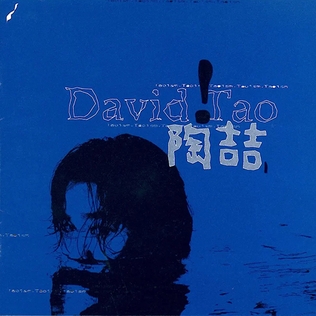
David Tao陶喆
Kimberley Chen陳芳語
Lala Hsu徐佳瑩
Beyond
Eason Chan陳奕迅
Jolin Tsai蔡依林
Faye Wong王菲
Mayday五月天
JJ Lin林俊傑
Teresa Teng鄧麗君
二
introductions
Who are we?
We're juniper and pine — a musical duo based in Queens, NYC.
Why are we here?
Using art to connect past, present, and future.
三
performing
introductions
We perform covers
a cover from us
四
writing
introductions
And we write music, too
Pop, folk, experimental, etc... here's two songs we wrote
五
before we start
A quick survey
Raise a hand if this is true for you —
1You play, or used to play, an instrument — guitar, piano, anything.
六
before we start
A quick survey
1You play, or used to play, an instrument — guitar, piano, anything.
2You speak Cantonese at home.
七
before we start
A quick survey
1You play, or used to play, an instrument — guitar, piano, anything.
2You speak Cantonese at home.
3You speak Mandarin at home.
八
before we start
A quick survey
1You play, or used to play, an instrument — guitar, piano, anything.
2You speak Cantonese at home.
3You speak Mandarin at home.
4You can read and/or write Chinese.
九
the building blocks
Basic song elements
Every song has four main elements.
Melody
The line you'd hum back.
Harmony
The chords underneath — our focus today.
Rhythm
How the time is divided up.
Lyrics
The words in the song.
十
harmony
The 12 notes
Look at a keyboard and a pattern jumps out: after 7 white keys and 5 black keys, a note name shows up again — just higher. That's an octave.
Those 12 notes, repeating up and down the whole keyboard, make up all the raw material used by Western music. Every scale, every chord, every key is just a different way of picking from this same repeating set of 12.
十一
harmony, part 1
harmony
What is a scale?
A scale is a set of notes in order — the palette a song draws its chords and melody from. Here's the major scale, starting on C:
1
do
2
re
3
mi
4
fa
5
sol
6
la
7
ti
1
do
CDEFGABC
On the piano, that's every white key from C to C — the pattern of whole and half steps (W–W–H–W–W–W–H) is what makes it sound like home when it lands back on 1. That exact pattern is the major scale — it isn't tied to C. Start the same W–W–H–W–W–W–H shape on any of the 12 notes and you get that note's major scale: G major, F major, and every other major scale follow the identical recipe, just from a different starting point.
Major pentatonic
C D E G A — the same major scale with the 4th and 7th left out. No half-steps at all, so it's nearly impossible to hit a "wrong" note.
Harmonic minor
A B C D E F G♯ — a different W/H recipe, with a stretched step right before the final half-step home.
十二
harmony, part 2
harmony
Building a triad
Start on any note, skip one, add one, skip one, add one. That's a triad — a chord made of a root, a third, and a fifth.
1
root
2
skip
3
third
4
skip
5
fifth
The root gives the chord its name. Whether the chord is major or minor comes down to just one thing: how far that third sits from the root.
A few worked examples — the same C major scale every time, just starting the root somewhere new:
I — C major
C
root
D
skip
E
third
F
skip
G
fifth
A
B
C
D
ii — D minor
C
D
root
E
skip
F
third
G
skip
A
fifth
B
C
D
V — G major
C
D
E
F
G
root
A
skip
B
third
C
skip
D
fifth
十三
harmony, part 2
harmony
Major or minor? It's the third
Same root, same fifth — only the third moves, by a single half-step.
C major's third is E. Lower it one half-step to E♭ and the same shape becomes C minor. Press play on each and listen for the shift.
This same third-based logic is why chords get labeled with roman numerals instead of plain letter names: the numeral marks which scale degree the chord is built on, and its case shows the quality it comes out as — uppercase (I, IV, V) for major, lowercase (ii, iii, vi) for minor, and a ° for diminished (vii°). The pattern is identical in every key.
Speaker note: talk about our use of guitar tab, piano visual, and staff notation.
十四
harmony, part 2
harmony
The chord scale, and your key
Build a triad on every degree of the major scale, and the key reveals its whole chord family:
tonic — home
subdominant — departure
dominant — tension
mediant — a pivot
十五
a first pair
harmony · progressions
I–IV–I and I–V–I
I – IV – I
I – V – I
十六
two classic formulas
harmony · progressions
IV–V–I and ii–V–I
IV – V – I — used for everything
ii – V – I — jazz tl;dr, we'll see this again
ii and IV share two notes (F & A) — they do the same job. Swap one for the other and the shape holds, but the color changes.
十七
option A
harmony · progressions
The four-chord song
Extend IV–V–I with one detour through the relative minor first, and you get pop music's most reused loop:
I – vi – IV – V – I
Four songs, same shape, all in C — next up.
十八
four-chord song · example 1
harmony · progressions
喜歡你
Beyond
I – vi – IV – V – I (in C)
Lyrics — first loop of the first chorus: 喜歡你那雙眼動人 / 笑聲更迷人 / 願再可輕撫你
十九
four-chord song · example 2
harmony · progressions
愛你
Kimberley Chen
I – vi – IV – V – I (in C)
Lyrics — first loop of the first verse: 我閉上眼睛 貼著你心跳呼吸 / 而此刻地球 只剩我們而已 / 你微笑的唇型 總勾著我的心 / 每一秒初吻 我每一秒都想要吻你
二十
four-chord song · example 3
harmony · progressions
Every Breath You Take
The Police
I – vi – IV – V – I (in C)
Lyrics — first loop of the first verse: Every breath you take / And every move you make / Every bond you break / Every step you take / I'll be watching you
二十一
four-chord song · example 4
harmony · progressions
Baby
Justin Bieber
I – vi – IV – V – I (in C)
Lyrics — first loop of the first chorus: Baby, baby, baby, oh / Like baby, baby, baby, no / Like baby, baby, baby, oh / I thought you'd always be mine, mine
二十二
option B
harmony · progressions
Using the iii chord
Use the iii (the mediant) along with the vi to linger instead of building tension. This creates a wistful, melancholic vibe within a major key.
I – iii – vi – iii – ii – V – I
vi (Am) is the relative minor of I (C). Every major key has a relative minor, and vice versa. These keys are called "relative" because they share the exact same notes — the only difference is which chord feels like "home": C in C major, Am in A minor, for instance. Notice the voice leading: most notes hold or step by a half- or whole-step to the next chord, rather than jumping around.
Speaker note: this is a natural place to start talking about chord inversions and voice leading — the piano/staff voicing above already uses them.
二十三
iii chord · example 1
harmony · progressions
把悲傷留給自己
Bobby Chen (陳昇)
Verse progression: I – iii – vi – iii – ii – vi – ii – V – I
Lyrics — first loop of the first verse: 能不能讓我 陪著妳走 / 即然妳說 留不住妳 / 回去的路 有些黑暗 / 擔心讓妳 一個人走
二十四
iii chord · example 2
harmony · progressions
森林
Mr. (Mr. 樂團)
Chorus progression: I – iii – vi – iii – IV – iii – vi – ♭VII – V
Lyrics — first loop of the first chorus: 其實 命運就像大廈 如都市幻化 / 淩亂如燈火中的密碼 / 露臺 看看世界吧 / 這個天下 閃爍風光不再嗎
二十五
a last touch
Voice leading & descending bass lines
A chord's notes don't have to stay in root position — any note in the chord can sit in the bass. Walk the bass down the scale, step by step, under an otherwise ordinary progression, and the harmony gets a current running underneath it.
C
I
B
V
A
vi
G
I
F
IV
E
iii
D
ii
G
V
C
I
Bass line: C–B–A–G–F–E–D walks straight down the scale, then G–C closes the cadence. The chords above are ordinary I, V, vi, I, IV, iii, ii, V, I — only the bass note per chord changes.
二十六
voice leading · example 1
harmony · progressions
富士山下
Eason Chan
First loop of the first verse
Lyrics — first loop of the first verse: 攔路雨偏似雪花 飲泣的你凍嗎? / 這風褸我給你磨到有襟花 / 連調了職也不怕 怎麼始終牽掛? / 苦心選中今天想車你回家
二十七
voice leading · example 2
harmony · progressions
流沙
David Tao (陶喆)
First loop of the first chorus
Lyrics — first loop of the first chorus: 愛情好像流沙 我不掙扎 / 隨它去吧 我不害怕 / 愛情好像流沙 心裡的牽掛 / 不願放下 oh baby 讓我這樣吧
二十八
further listening — not performed today
harmony · progressions
A few more to explore on your own
那些年
Hu Xia (胡夏)
K歌之王
Eason Chan (陳奕迅)
二十九
summing up
What we covered
1
Scales
2
Chords
3
Progressions
4
Voice leading
Many songs mix and match the ideas we've presented today. 泡沫 (G.E.M.), for example, combines a ii–V–I, IV–V–I, and a short descending bass line pattern (I to vi) within its chorus.
三十
one more thing
In your handout
We covered the basics of CPOP harmony today. Your handout has more useful information in case you'd like to learn more.
Melody and lyrics
Melodies in pop songs. Tl;dr — melodies need to fit tones in Cantonese or Mandarin. Strong melodies fit the chord tones in the progression underneath. CPOP artists often use the pentatonic scale to sound more Asian.
Rhythm
Most songs are 4/4, 3/4, or 6/8.
More on harmony
A few more tricks — extended harmony and borrowed chords.
Follow along with us
More covers, more interpretations, and original music coming soon.
Website
juniperandpine.fyi
Instagram
@juniperandpine.music
YouTube
@juniperandpine-music
Got questions? Reach out any time — about today's workshop, or about songwriting and music theory in general.
P.S. Are you interested in learning Cantonese? We teach it! In fact, we're developing a free Cantonese learning app that's about to go into beta. Follow us for more information, and shoot us a message if you'd be interested in beta testing!
三十一
to close · a performance from us
愛你
Kimberley Chen · played in A major
Verse — I · vi · IV · V
Chorus — vi · IV · I · V (the same four chords, reordered — very common)
三十二
to close · a performance from us
海闊天空
Beyond · sounds in A major, capo 2 — shapes shown in tab are relative to the capo